1. Parental leave transitions are full of overlooked risks
Parental leave is a moment of intense change - both personally and professionally. But companies rarely plan for the full scope of what’s at stake for both individuals and the business.
Things like career progression, team dynamics, emotional wellbeing, coverage planning and reonboarding plans are all important pieces of the puzzle. Without thoughtful preparation, even top-performing employees can feel uncertain about their future or disconnected from their role.
And for the business, poor planning can lead to productivity gaps, unmet team goals and unnecessary attrition.
The implications for HR are clear: parental leave must be treated not just as an absence to manage, but as a high-stakes moment in the employee lifecycle.
2. Managers need resources to lead through parental leave, too
Most companies don’t have formal parental leave planning at all - especially for managers. And yet, the manager is often the most influential factor in whether an employee has a positive or negative experience and whether the team stays on track in their absence.
Without proactive guidance, even well intentioned managers can unintentionally derail a smooth transition. Equipping them with tools, clear expectations and real-life scenarios ensures that employees feel supported and set up for success both before they go out and when they return.
It also helps teams cover for their colleagues in ways that are sustainable and goal-oriented, preventing burnout and breakdowns in work transitions.
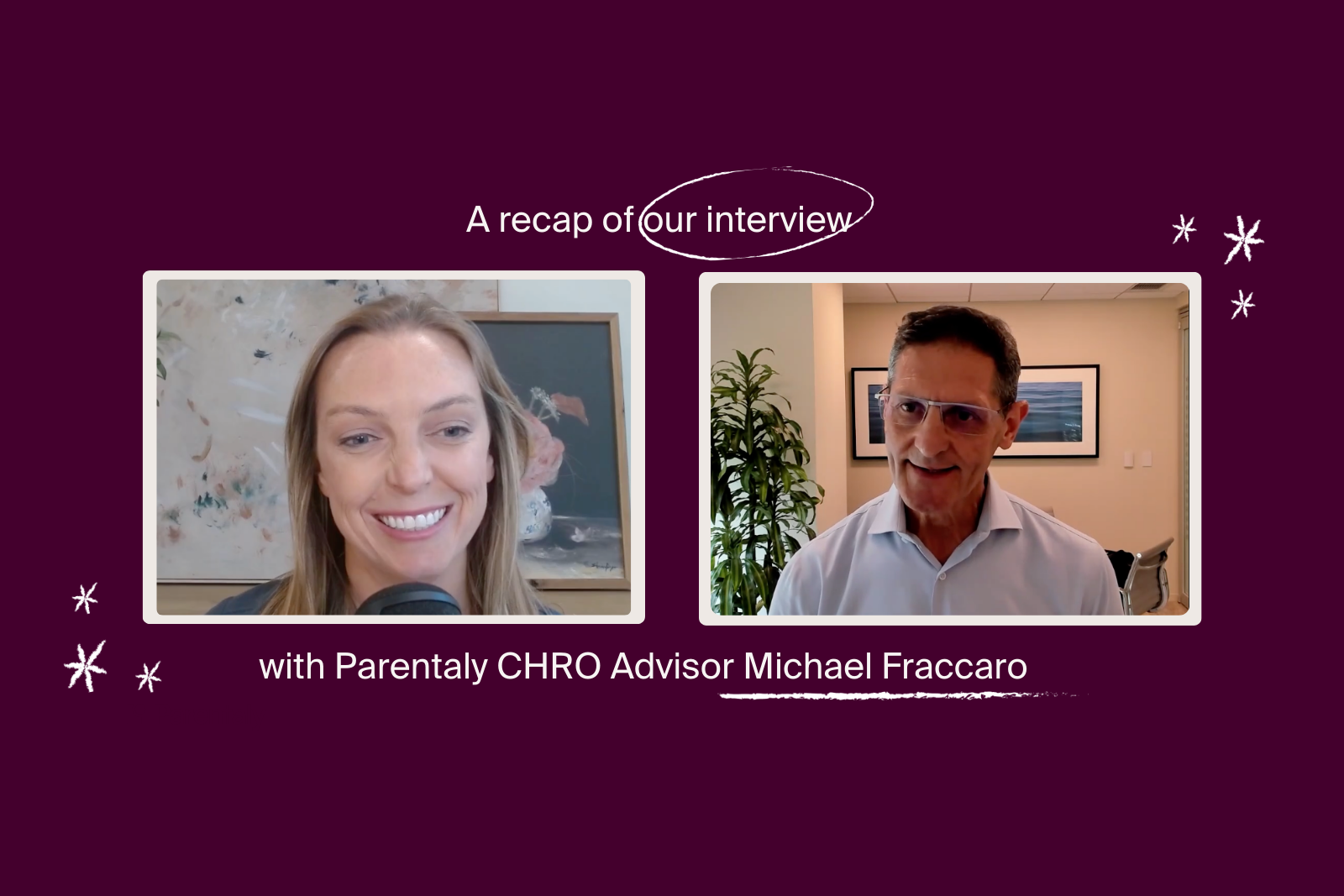
Michael adds that even small tweaks can make a big difference for parents, sharing an example related to work travel accommodations:
“It could be choosing a hotel with a fridge for pumped milk, or shortening a trip by two days. The tweaks are small, but the impact is huge.”
3. Leave support is a talent strategy, not just a perk or benefit
Too often, parental leave is positioned as a generous benefit rather than a business-critical investment. Michael urges HR leaders to reframe their approach and track outcomes.
Rather than focusing only on policy, he urges HR leaders to look at the business metrics that matter most: retention, productivity, and turnover. These directly reflect the ROI of supporting employees through life transitions.
Michael believes this represents the next evolution in modern talent strategy: treating parental leave as core to employee experience, workforce planning, and long-term business success.
Because as he put it:
“The future of work is about investing in your people. Supporting parents is part of that. It’s good for the employee, the company and society.”
Heading 1
Heading 2
Heading 3
Heading 4
Heading 5
Heading 6
Lorem ipsum dolor sit amet, consectetur adipiscing elit, sed do eiusmod tempor incididunt ut labore et dolore magna aliqua. Ut enim ad minim veniam, quis nostrud exercitation ullamco laboris nisi ut aliquip ex ea commodo consequat. Duis aute irure dolor in reprehenderit in voluptate velit esse cillum dolore eu fugiat nulla pariatur.
Block quote
Ordered list
- Item 1
- Item 2
- Item 3
Unordered list
Text link
Bold text
Emphasis
Superscript
Subscript