Complete this form to access the benefit
If your employer offers Parentaly as a benefit, fill out your details below to get started! We’ll contact you within 1 business day with next steps.
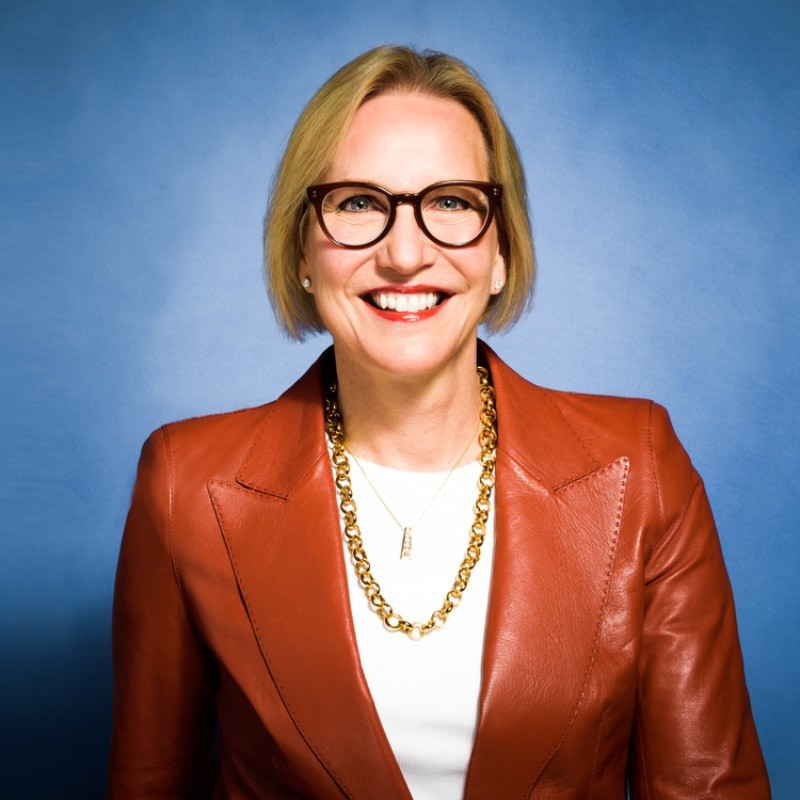


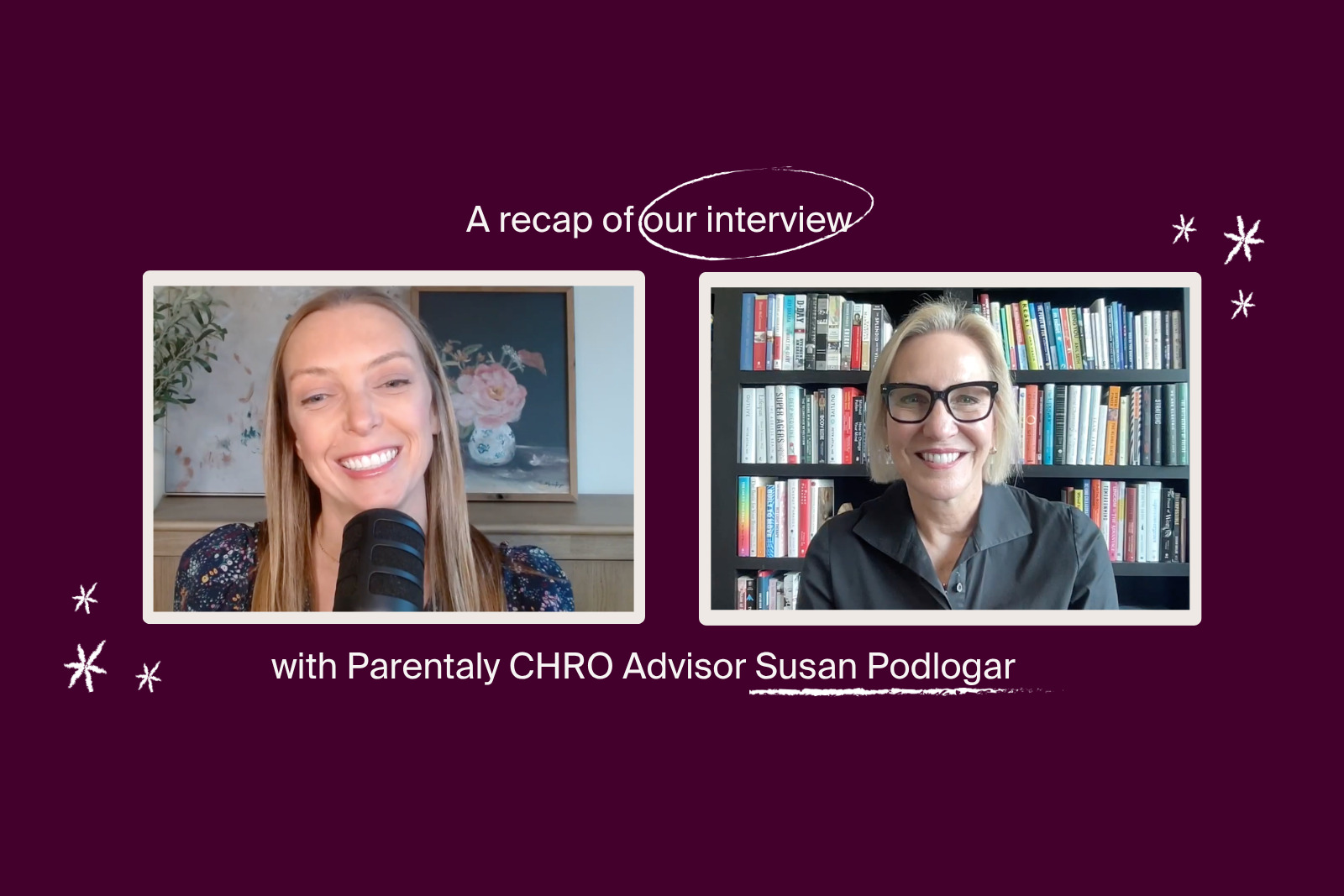

After becoming a parent, Susan Podlogar made one of the most difficult choices in her career: she stepped away from work she loved to focus on her family.
Five years later, she returned to build a decades-long HR career at Johnson & Johnson and MetLife, where she served as their Chief Human Resources Officer until she retired.
Our paths crossed with Susan at just the right time. After having the opportunity to connect with her about Parentaly, our mission immediately resonated and she accepted our offer to join our CHRO Advisory board.
What gets Susan excited about Parentaly is she sees us as a company solving one of the most overlooked challenges in business: how to manage parental leave as both a personal and business transition.
In this episode, Susan opens up about her career break, what she learned from stepping away, and why she believes parental leave is a defining leadership moment - one that can either create disruption or drive engagement, development and business continuity.
She also reflects on how expectations for working mothers have evolved - from her own generation to her daughter’s - and why the next era of work demands more empathy and intentionality from leaders.
Disclaimer: This podcast transcript is autogenerated and may contain minor errors or discrepancies.
Allison: Hello, Susan, welcome to the False Tradeoff podcast.
Allison: I'm so excited to chat with you today. We were introduced by Michael Fraccaro, former CHRO and MasterCard. And I'm not exaggerating when I say our whole team, as we got to know you over the past couple of months, everyone kind of refers to you as this like sunshine in the room, not just because you're really fun to be around, but also because you tend to sort of like immediately highlight what things we're doing well and what things we are not and where we need to be focusing on doing better. So I find you to be not only just a fun person to talk to, but also really direct and helpful. So I'm really excited for this conversation today.
Susan: Thank you for the feedback. We're all work in progress. Every day I try to improve. So I appreciate the feedback.
Allison: Yeah, I'm curious. You know, I'd love to spend some time talking more about your earlier career and then how that led you to all of the successes that you would eventually achieve in your career. Before I do that, I caught you at a moment in time. You were newly retired and we convinced you to join our CHRO advisory board. I'm curious, what was it about Parentaly that got your attention then in a moment in your life where you quite frankly don't need to do anything. You're done, right? Like you don't have to do anything. What was it about that conversation or that outreach that really stuck with you?
Susan: Yeah, so I'm driven pretty much by bringing out the best and the potential of employees and the gifts that they bring to work every single day and also driven by this profound family environment. I'm the ninth child in my family. And so these types of decisions of working, not working, you know, have been around my nucleus of a family for years and decades as we see the next generation coming through. And when I saw that having a child or adopting a child is one of the most beautiful joyous times in an organization or in person in person's life, that it shouldn't be stressful and it shouldn't be stressful for anybody. And the way that Parentaly looks at this of managing disruption,
Allison: That's so well put. And I think that you really nailed so much of what we focus on. And quite frankly, the title of our podcast of the false tradeoff is that oftentimes we think it's either you're all in on your family or you're all in on your career and it can't be both. And of course you could spend hours unpacking that, but it is this constant thing that we are navigating of like, it's not actually that clear cut of one or the other.
I wanna talk about your personal professional experience because I remember in our first conversation, I sort of pitched you on, here's what Parentaly is and here's the challenge we're focused on. And you said, you know, this really resonates with me because I did take a career break when I had my children. Walk me through what that moment was like for you. How did you make that decision to pause that professional career at that moment in time?
Susan: Yes. It probably was one of the hardest career decisions I took. Just because I kind of was pulled in two different directions. As I mentioned, I come from a large family. I would have been the first going back into work right away after having a child. So there was almost this expectation that I would stay home. And then people that knew my career, there was almost this expectation that, wow, you know, she's ambitious.You know has done well so far.
I had a boss that said Susan, you're gonna do great in your career. Just keep it going and so I had these two things just pulling at me to say what do I do? do I do and you know for me it was I just had to do what was right for me And it was that choice that I was kind of expected to stay home Expected to go with my career, and it really took some self-reflection of what do I do? What's right for me?
Allison: Mm-hmm. Did you make that decision before you had your first child or did you feel like you changed when you had your first child? I'm always curious what people's response is to that.
Susan: Yeah, I went back for two weeks.
Allison: Wow, okay.
Susan: And I was like, I can't do it. It just wasn't right for me. It's right for so many people. But for me, it wasn't right for me. And so I made that decision with every intent to go back to work. And so, you know, I went, you know, got back in whatever clothes I could fit back into, back into the office, back into work. And it took me two weeks to say, not my gig right now.
Allison: And then you didn't return for, I believe, five years. Is that correct? What then was the impetus to go back?
Susan: A couple things. One, I am career driven. I am impact driven. And I always fundamentally had this core belief that if I could help people in the workplace achieve their potential, achieve the gifts that they've been given as they come into work every single day, then that's the contribution that I can make to society and I can make to work.
Allison: What did you learn about yourself that you then brought back to work from that period when you were not working outside of the house?
Susan: Yeah, I think it's something that I've carried with me since that time because the choice was so difficult. I had to really reflect as I mentioned and forget what it's expected. I had to reflect and say what's right for me. What's right for me at this time. And that's how I've that's how I've carried my career forward. That's how I carried my life forward. It is you know there's a lot of influences that will tell you what you need to
Allison: Were you ever tempted to spend even more time at home? So did you go back to work and then think, I want to take another bit of time at home? Or were you like, I'm back in and things just felt right and you were off to the races?
Susan: They felt right, but boy boy, I mean, it was hard. During, you know, when I was out, you know, you have this huge FOMO. mean, it's, know, what am I missing? Am I missing these critical times in my career? Am I gonna actually be stepping back a lot further than I thought I could in my career because I'm staying home? When you have all these things that you question while you're out, but once I was back in, and but it was hard it was hard I mean there are days when you know the kids get sick or you know something's happening in life and you're like this is is really really hard and you know my husband was working full-time at the at the same time and those are I think for parents they're the hardest time not only for parenting but they're the hardest time in a marriage and I always say if you can get through those young years Brent and I have been married for 40 years you make it through anything, right? It's those years where you both have competing demands that make it very difficult. That's why I love this company. know, Parentaly allows you to have a safe space to walk through some of those challenges, get guidance on those challenges. How do we work through this? And so that you can work through those difficult times and choices.
Allison: I hear a lot of people say they wish they could take some time away from the paid workforce, but they're really afraid about how hard that will be to come back. In hindsight, are there certain things that you think either you did or things that happened to you that really helped you accelerate back in?
Susan: Yeah, I actually think performing at a pretty high level and building a network before I left helped me tremendously. And so I was in consulting before I left and so had a lot of folks within my network because I was always touching different companies. And so I would say one, know, people that are thinking through this early in career, you might think, I don't need a big network, but actually at any time you could use a network and build when I went back and I interviewed at Johnson & Johnson, I went in for my interview and I thought, okay, this is gonna take a while. I have time to find daycare. I interviewed. They asked me to stay in the afternoon. By the time I walked out, I had an offer in hand and they asked me to stay two weeks later. And I was just like, my gosh, I have daycare set up. I mean, it's just like, what do you do? But it worked beautifully.
Allison: Yeah.
Susan: It was, you know, it's a little bit tough transitioning back, but the entry point in was pretty seamless.
Allison: Right. Yeah. Well, that's good to hear that you didn't want to do it again. I think that what I always hear because my children are younger is it only gets harder with the kids. But I think it gets harder emotionally, not physically. Like, it feels so hard in this moment today. And so I had wondered if you would be tempted as the children get older and have more complex challenges and they're actual humans with real problems, so to speak, with friends at school and sports and all of those things that come up if you would ever be tempted to make a different choice at that stage. But it sounds like, no, that was just the right thing for you.
Susan: Well, it was the right thing for me and, you know, as I mentioned, Brent and I have been married for 40 years, you know, very fortunate and he went off ramp. So he was full-time, hard-charging in the pharmaceutical business. And I was in Connecticut at the time. Johnson & Johnson had kept in touch with me. Like every six months they'd call, you know, want to come back, you want to come back. And at one point his company wanted him to move him to Boston. J &J had been calling me. And so we had a very candid conversation and said, okay, I stepped out. It's kind of my time to look at my career went back, got his masters, then he taught at university, which gave him more flexibility to be there when the kids were in those middle school years, which are super difficult in a different kind of challenge that you have.
Allison: Okay. Yeah. Right, right. And I do think it is interesting to hear how different family units are able to figure out what is the right structure. And you're right that so much of what Parentaly does in those early years is talking about this is a structure and a system and who is in your village and what things can you pay to outsource? What things you have other humans in your, you know, vfamily system or community to support with that. And it is a constant realignment of who's doing what, who's prioritizing what. So that's a helpful thing for us always to think about. And we always say this in Parentaly, everything can change. Try something. You know, I think we put a lot of pressure on ourselves to say, this is the choice. Well, no, you can always change if it doesn't work. Yeah.
Susan: You can always change. You can always change. And for me, the pressure, like I artificially put so much pressure on myself when I went back. And if I look back, I regret that so much. People ask, where have you failed in your career? Listen, I didn't show up for my kids sometimes when I should have been there. And it was a real awakening. I'll never forget the story of one was at a soccer game and his little buddy said, Hey, who's that lady with your dad? And he's like, that's my mom. And he goes, you have a mom? Whoa. That was feedback. Like I could have used, you know, a support system around me to really, do you navigate this when you're going back and you are the sole, you know, primary breadwinner now within the family. These are tough, tough conversations and tough times. And people do put a lot of pressure on themselves. And so I shifted. That was my feedback wake up call that I needed and I shifted and I made sure I was there for his soccer games and we I made sure every morning I made breakfast for the kids and so I had to carve out a unique time that was right for me in order to show up how I wanted to show up but how I didn't have the resources like apparently which I wish I could have had to be able to bounce things off of like how do you navigate this
Allison: Yeah. And it is even helpful to hear that because I think I have a lot of guilt. My son goes to baseball practice and I sit in the car and I work because it's at 530. And, you know, like I can still see him from the car. I'm not really paying attention to him, but I had a lot of guilt around that until I started talking to other moms who were like, yeah, I mean, he's eight years old. Who cares? You know, it's early, you work there, you're at all the games. You don't need to also watch intently every single practice.
But these are the types of things that I think a lot of us put on ourselves of like, what does make the right, what is the right choice here? I want to switch gears a little bit. So I want to talk a little bit more about your perspective with parental leave more broadly, which I know you and I have talked a lot about, but I'm curious to hear in your words, why you would, why do you believe that parental leave and how companies support the experience is actually a business critical thing that every company needs to focus on.
Susan: Great question and it's, businesses are there to get an end product, serve their customers, productivity, meeting their strategic objectives, meeting customer needs, meeting shareholder needs, all the stakeholders' employee needs as well. And for me, this leap is a disruption, a potential disruption. And when you have disruption, you have uncertainty.
When you have uncertainty, you have stress. When you have stress for the individual, for the manager, for the team, you have a decreased productivity and you have decreased engagement. That directly impacts the business and the business outcome. But if you flip it and you get it right, you get the reverse, right? So it's an opportunity for career development, for the team, being able to reassign some of the work, develop some of the people. It's an ability
Allison: Why do you think that this topic is important for the future of work?
Susan: Yeah, I actually don't call it future work. I call it the next era of work because I do think that we're in it. The future is here. But it is an era, right? If you think about work and how much it's changed, we are in a unique time, which is super cool because we can shape it so differently than what it's been in the past. And when you look at this, when you're looking at what are you actually shaping, you have to take into consideration what are employees expecting and I believe that employees expect this trust bond with their employer differently than they have in the past. In the past trust bond might be stability, might be you know jobs for life or things like that. The trust bond that that appears now is I care for you, I invest in you, I got your back.
And those progressive companies that are able to show that are going to be able to get the talent that is looking for not only that, but they're going to get a talent that's more engaged, more productive, because they're secure, right? They know their company has their back. And so I think in this high tech world, they're still employees are looking for this human side in the organization and Parentaly brings
Allison: You kind of already answered my next question. I was gonna say, what is it about our specific approach that resonates with you? But I feel like you've actually brought that to life throughout this conversation. But I'm even thinking about our subgroup meeting that we had yesterday around, you know, with AI coming into play and how does our approach resonate and continue to evolve in that next era of work? I'm curious what...
How would you summarize what aspect of our specific approach appeals to you the most?
Susan: I think it's probably two things. One is the deep expertise that you bring. It's scientifically data-driven. You look at it. It is probably three things. Two, it's holistic. It looks at not just the individual because an individual is part of an ecosystem. I always look at the ecosystem in an organization like a pond. If you take something out of a pond, the pond only gets stronger as an ecosystem or weekends, it never stays the same. So the way you look at it is as an ecosystem between the individual, the manager and the team. And so you're looking at all those components together. And then I think, you know, from our conversation yesterday, this component of AI can bring some hyper personalization into it, rather than just rolling out a broad program, everybody here it is uptake, you're able to go ahead and get much more specific based on.
Allison: Yeah, I love that. Okay, I am going to move into our rapid fire and I'm even gonna add a question here that isn't even on our original list. I know I didn't give you these questions before and so I'm sure you're terrified. No, they're very easy, don't worry. But I will ask you these questions and we're just looking for gut quick answers and we'll go through them quickly. What is the best leadership advice you've ever received?
Susan: You are a leader when you can look at the people that you've developed and they've moved forward and they've grown. That's your measure of leadership and success in your career. I got that in my very first job. Mr. Kurt Engelman, I thank you for that. I was an analyst sitting in this little cube and I'm like, why is he telling me this? But it's something I've always remembered and I'm so grateful he showed me that.
Allison: Yeah.
Allison: That's even helpful to compartmentalize things. Like when things go wrong, it's not about you. It's like, how do you have that healthy distance from the results and not take it personally? So it's helpful in many different ways. What is the biggest myth about HR that you wish would just go away?
Susan: That we're looking for a seat at the table. I mean, that just drives me crazy. That, I'll tell you the things that drive me crazy.
Allison: Yeah.
Susan: That HR wants to talk about schedules, hybrid or whatever, that HR wants to talk about performance management and the seat at the table. think HR at this point is at one of the most beautiful times in this next era of work of really shaping what the employee experience is going to be and what productivity and productive output looks like in an organization.
Allison: What is one trait that you would look for if you could only hire based on that trait?
Susan: I can't do two. All right, I think they go hand in hand, humility and learning agility.
Allison: Okay, two.
Allison: That's good. All right. I like that I gave you two because I like those two together. Policy or program that you were most proud to have implemented at J &J.
Susan: At J &J, my gosh, there were so many things that we did. Can I switch it to MetLife? okay. Yeah, J &J was a, because.
Allison: That was going to be my next question. So yes, you can take MetLife. That's fine. I know you were there forever.
Susan: Yes, I know, I know. So MetLife, I would have to say it's the gig economy that we put in and we had just so many employees participate, so many employees just go to projects and bring out the gifts that they bring to work every single day. In J &J, I would have to say we did so many things because it was in so many different parts of the organization, but I think really investing in managers in one of my roles, we really took the time to really invest in what is a manager, what is a manager as a coach rather than a manager as a manager and just the impact that that had on the employees and that's what I'm about. It's listen programs policies they're great but the true test of what you do in HR is what is the impact on employees and how does that have in terms of their engagement, their retention, their attraction, motivation, etc.
Allison: Okay, last question, which is a wild card. So I'm going to throw this in here. I follow you on Goodreads. I'm a big reader. I know you are as well. What is the best book or your favorite book that you've read in the past, I don't know, two years?
Susan: That's a really, really, I would have to say probably I'm reading one of them right now and happens to be right here. High Performance Habits by Brendan Bouchard. the reason why I love that is because it looks on what do you, when you reflect on yourself, what do you want to be known for? What are the things you're going for? And what are those three words? You can only have three words and keep assessing
Allison: Okay, I'm adding that to my list.
Susan: Against those three words over the time. And then I would have to say probably Ryan Holiday is one of my other ones. I have a lot of Ryan Holiday up there and Discipline is Destiny is probably one of my favorite ones. Both.
Allison: So you're a nonfiction fan. Okay.
Susan: Both. I try to do a 50-50. Yeah. In fact, I just finished up my 32nd. So my goal this year is 40. I just wrote in my 32nd one of the day. And then anything fiction, historical fiction by Marie Benedict, the personal librarian. I love that book. So yeah, lots of really great books out there. As you can see.
Allison: I love this. Yeah, I've gotten rid of most of my books because I hand them out to people when I'm obsessed with them and so now they're gone. Thank you so much for your time today. This was so much fun. I think you have such a cool inspirational story and the biggest thing I'm taking away from this conversation really comes back to values and that you need to be authentic to yourself and… that will allow you to make the right choices and you can continue to iterate and change what that means in practice. But it feels to me like at your core, you have stayed very true to yourself through different activities and actions, which I just think is really fun to hear you bring that to life. So thank you so much for your time today.
Susan: Thanks.
Monthly updates on our newest resources, podcast episodes and must-know news and stories related to parental leave.
