Complete this form to access the benefit
If your employer offers Parentaly as a benefit, fill out your details below to get started! We’ll contact you within 1 business day with next steps.
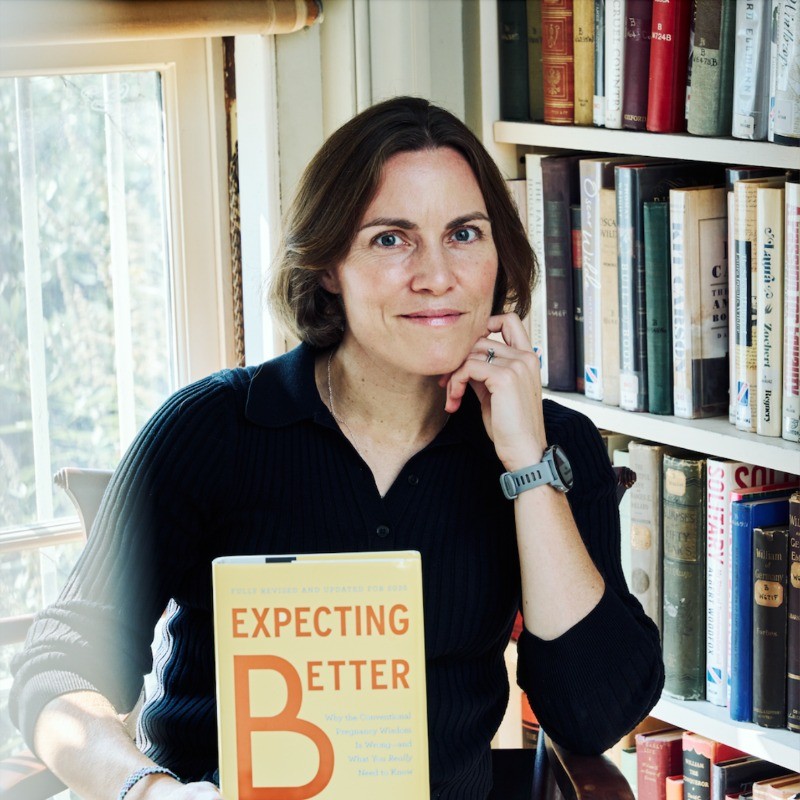


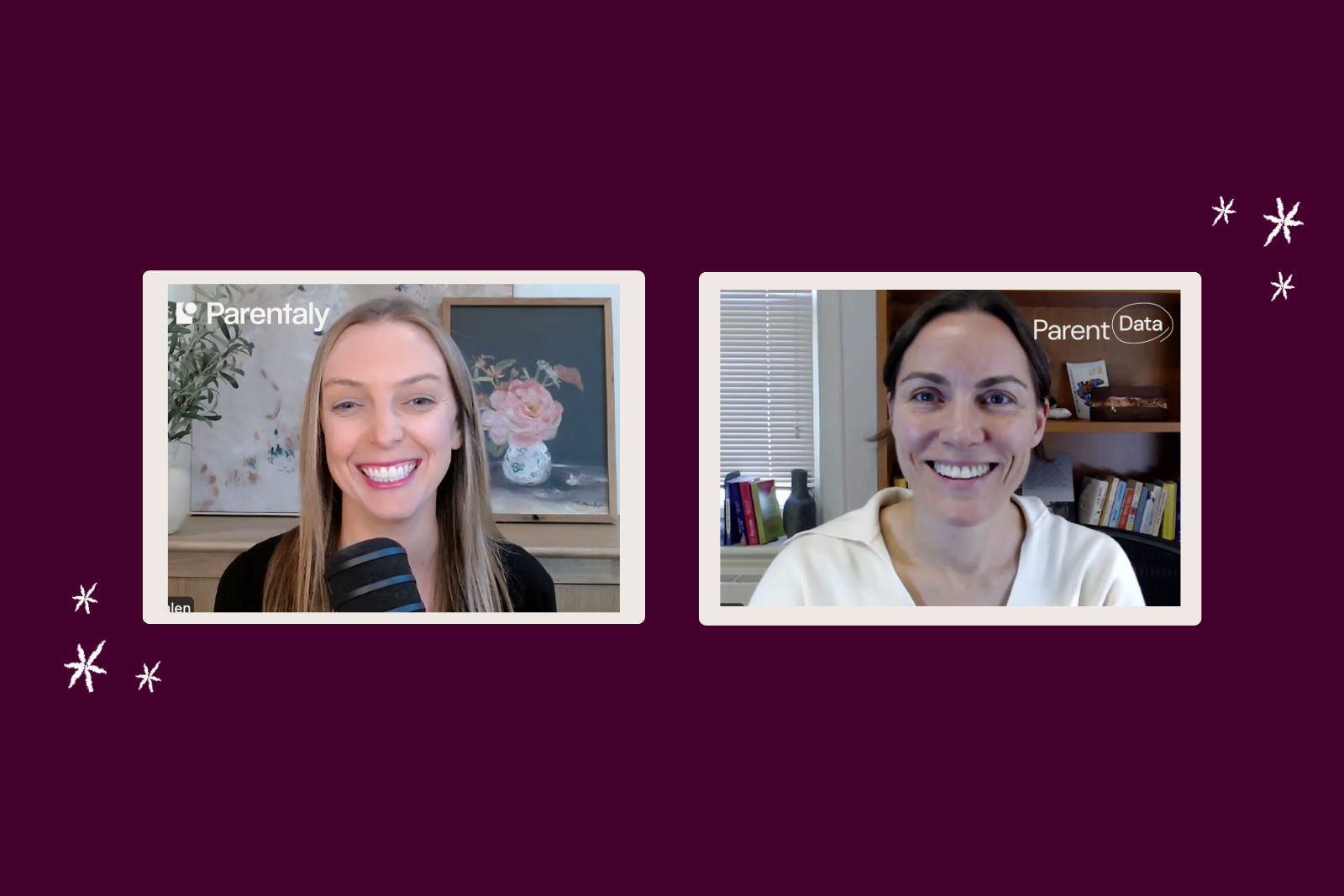

Earlier this year, we announced our partnership with ParentData - founded by NYT-best selling author and economist Emily Oster.
To kick off this partnership, we hosted an exclusive AMA with Emily. The session was packed.
Over 100 questions were submitted in advance, covering everything from how to use data to decide when (or if) to have another child, to what parents really overthink in the first year, to why your kid probably isn’t going to the Olympics.
And while this Q&A was originally designed just for our clients, it was simply too good to keep to ourselves - so this week, we’re doing something a little different and sharing the replay of our October 9th session.
Whether you’re trying to conceive, expecting or in the thick of raising toddlers or teens, Emily’s blend of data, clarity and humor will leave you feeling informed and confident.
Enjoy this “bonus” episode - and we’ll see you in 2026!
Disclaimer: This podcast transcript is autogenerated and may contain minor errors or discrepancies.
Allison: I am going to as quickly as possible get into what we all came here to talk about today. I'm sure many of you already know Emily Ostert, why you showed up today and you likely have read many of her books. She is a New York Times bestselling author of books, including Expecting Better, Cripsheet, The Family Firm, The Unexpected. She is also a professor of economics at Brown.
And more recently, she also added another thing to her resume, which is that she's a CEO and founder of Parent Data. I am thrilled to let you all know that if you are going through the Parentaly program, you now have free access to Parent Data. So go to your Parentaly toolkit where you will find information about how to activate your Parent Data account for free.
And for those of you on the line who are not in the Parentaly Program but are interested in leveraging Parent Data, you will also have access to a discount code, which I believe we're gonna throw into the chat now. So even if you don't get it for free, we wanna make sure everybody has access to this. With that, I'm gonna stop sharing my screen and I am going to welcome Emily to the virtual stage. And we're gonna talk a little bit more about Parent Data before we get into the nearly 100 questions that you all submitted in advance. Welcome Emily.
Emily: Thank you. I'm so delighted that so many people joined and I'm so delighted to see you again. Let's have fun.
Allison: I was like buzzing after the last time we did this. And so I said, oh my gosh, I cannot wait to do this again. I want to start really quickly by having you share a bit more about Parent Data. I know that this is something that is a bit of a long time coming for you and a labor of love. So I figured you would be better to share what that is and why you did it than to have me talk about it.
Emily: Yeah, so Parent Data really comes out of my books, Expecting Better, Crib Sheet, Family Firm. And, you know, I'm so proud of those books and I love that people read them. And I also know that they don't provide every answer. And I wanted there to be a way that in the middle of the night, when you wake up and you're late night panic Googling something that you have a place to look for answers that you know are based on evidence and data and that will not cause you to panic. So Parent Data is an online resource. It's over 1,300 pieces of content. It has an AI-powered search. It has all of the answers to all of the regular questions, like is my baby's poopo normal color? What's really the deal with breastfeeding? All the way to, I swim in a freezing cold river in Vermont while I'm pregnant? The online resources really allowed us to answer such a wider range of questions with the same kind of evidence-based approach that I take in the books. And we have age-specific newsletter. So if you're pregnant, you can get a weekly newsletter that aims to anticipate some of those panic questions and get you more prepared. So labor of love is a good way to put it. It's a resource I'm really proud of and that I hope makes people's parenting and pregnancy journeys easier. And for those of you on the line today, a lot of the questions that we're going to go through today, I would say, are reminiscent or identical in fact to the questions that you can leverage Parent Data for in the future. So if you like what you hear today, you can go there to keep getting more Emily Oster to basically teach you how to be the best parent that you can be.
Allison: No pressure. And we have some stuff even if you're, we have like alcohol and health, we go into creatine, we go into some of the questions that people have that are sort of parenting related but are also by your own health.
That's awesome. And I forgot to mention, we had so many questions that how we're gonna structure today is we're gonna go by phase of parenthood. So we're gonna start with pregnancy and baby, and then we are going to keep going all the way through even a couple of questions for adult children. So we had tons and tons of questions. We have attempted to summarize some of the questions. So if you don't hear your exact language in these questions, it's because there were multiple people who asked the same question and we kind of merged them together and we likely will not be able to hit every single question. But without further ado, I'm gonna dive right into the pregnancy and baby section. If you had to pick one area where parents consistently over invest their worry in the first year and one where they under invest, what would they be?
Emily: So I think people over invest in so many things, but let me take one, is developmental activities. I think in the first year, I get a lot of questions that are like, my four week old is, I'm not showing them all the cards every time they're awake. You know, the kind of idea that like every time you're one month old is awake, it's an opportunity to invest in their, you know, admission to college or whatever it is. I think that's a, that's not true. And I think it causes people to be more anxious about those times and have a harder time enjoying them. I'd often tell people just like anything you're doing is fine. Vacuuming the house, walking around outside, reading something that you enjoy, just sitting around, it's fine. Like babies are learning from everything that's happening. They don't need you to specifically teach them things about black and white fish cards.
In terms of what people under worry about, I would say their relationship with their partner. I think that it's very, one of the biggest costs, often biggest issues in the first year of a kid's life is marital happiness declines. And some of that is a little bit inevitable because, you know, it's hard to have a kid and your time is more constrained and so on. But there are things people can do to invest in that relationship. And I think they often don't. And then that doesn't set you up well for the rest of the after that when you have a little more time and now you kind of have to get back into things. So I often tell people, like, think in advance about how you're going to maintain that connection, even if it won't be quite the same.
Allison: This is totally going off script, but now you've piqued my interest already and we've only gotten through one question. Has there been a lot of research on partnership dynamics as it relates to parenthood and what learnings can we take from that?
Emily: So I think there's one class of research which is about what happens to marital satisfaction, which declines precipitously in the first year of kids and then kind of slowly recovers, but not fully until you have grandkids. It takes a while, but it comes back. It comes back. And I think that there's some research on what we can do to try to improve that. There are some just conditions that make it easier. Like if you plan for the pregnancy, that tends to make things better.
There is a decline. And then I think we see also some differences in dynamics around time use, where, you know, this is often a time in a relationship in which women, if there's a male and a female partner, in which women end up taking on, like, more of the household work, and the kind of unevenness that's sort of already there can get worse. So, again, I think these are all things where some of it is a bit inevitable, but you can definitely make it better by knowing in advance it's going to happen and planning for how you're going to address it.
Allison: That's a great answer. This is an interesting one. There's lots of data on hospital versus home birth, but not a lot on birth centers. I'd love some stats or evidence on their safety.
Emily: That's a very hard question. Let me tell you why it's a hard question rather than just saying it's hard. So when we look at, even if we're comparing sort of home births, hospital births, but certainly if we're comparing and we're sort of putting in birth centers in there, we would like to compare two people with the same risk factors and going into these two different environments and what happens. And the issue is that the choice to use a birth center tends to be associated with having a much lower risk pregnancy. Because if you have a high risk pregnancy, you are more likely to be sort of having to go to the hospital for a birth. So we sort of pull into the birth center a lot of low risk births, then it's very hard to compare that group. It also tends to be a group with a different set of preferences. Women who are more likely to not want to have an epidural, to be more interested in a vaginal birth, probably more likely to have a doula. There's like many things that are kind of going in there. So it's certainly true if you looked at the data and you said, you know, what are the outcomes for births and birth centers versus hospitals, you would see lower C-section rates, you would see things like that. But it would be very hard to conclude that that was causal. So this is an example of something where I think a lot of it should be driven by your preferences and also, actually, many people don't have that. Like, there aren't that many birth centers. I think a lot of people would say, we should have more of those. That's a fair point. It's not often how the US health care system is structured.
Allison: Is there a link between a child's weight and how well they sleep? And this is the very common thing that we hear. Do children on the lower end of the weight distribution have a harder time sleeping through the night in the early days?
Emily: Early on, on average, yes. So very small babies will need to, their stomachs are smaller. They will on average, you know, need to eat more frequently. And so if you said, you know, what's the difference, what's the sort of potential sleep length for a baby who's seven pounds versus one who's 11 pounds, you know, as they get older, they can go longer without eating. And so that, in that sense, this is true. I think that people will take that too, sort of can take that too far. Like if your baby is born at 11 pounds, it doesn't mean it's gonna sleep through it. Like most of sleeping is behavioral and is neurological and is not about whether you are hungry or not. But it is true that there's some relationship there. And as your baby gets larger, they on average can sleep for longer stretches.
Allison: OK. Here's another question. I had never heard this before. Do tall, meaning 99th percentile babies, tend to hit milestones later than average sized children?
Emily: No.
Allison: OK. I was going to say, I've never heard that one before. OK. It's not.
Emily: There's the correlations with milestones. There are some developmental correlations with milestones. And there are some milestones that are hard if baby is very chunky, like not in a bad way, but just like, but no, no.
Allison: Yeah. OK. This is a really interesting one. And I am so curious to hear how you're going to answer this. Can you use data to decide when the right time is to add another child to your family? And we had a lot of people ask varying degrees of this question.
Emily: So let me break down a couple of versions of what people are asking there. So there's one question which I would describe as, what's a safe birth spacing? So I want to have kids close together. My doctor told me I should wait a year to get pregnant, should wait nine months to get pregnant. What does the data say? And so there, actually, we do have some data. There is some sort of limited evidence that if you get pregnant again within six months, so within the sort of first six months of a baby's life, that maybe the subsequent birth has a slightly increased risk of prematurity. I don't want to overstate either the size or the convincingness of that evidence, because the set of people who are getting pregnant so quickly tends to be on average a bit different. But there's some idea that your body needs some time to recover. And so sort of very short pregnancy intervals like that could result in some effects on birth weight.
When we go sort of past six months and we say like, OK, now it's been, you know, six months or even nine months that we really, there's really not much evidence that there's any downside to shorter birth spacing from that health standpoint.
The other question people might be asking is, you know, what's the right distance between kids to make sure they like their siblings. This is a version of a question I get all the time, sort of like, I want my siblings to be, my kids to be best friends with each other, like, how can I make that happen? You can't make that happen, sorry. Your kids may end up liking each other quite a lot. They may not end up liking each other quite a lot. A lot of that is going to be driven by features of their personality that you don't control and other things. And in fact, there isn't much systematic evidence that kids are closer friends or less close friends when you vary the spacing within some, you know, sort of typical window. So there's nothing in the data that would say having kids two years apart makes them more friends than having them four years apart or three years apart. It's just, you know, like, when you are an adult, you have friends who are four years older than you and six years older than you and two years younger. And like a lot of that's not about like, well, are they my, in my same age exactly. It's about whether I like them.
And we also don't have a lot of evidence about how to make your kids like each other except that you shouldn't compare them. We have only negative evidence, which is spending a lot of time saying like, well, you know, Tommy, Tommy ate his peas and don't you want to be like Tommy, that you're not supposed to do that.
Allison: Yeah. The only other thing I can think that question is about is, could be about is like for me as a working parent. And that's also like a separate.
Emily: And probably like most things, well, it depends. Depends on your situation, your circumstances, your preferences. Right. But I think it's a good, that's a good question to ask as a working parent, kind of like for the sort of structure that I want of my career over this period. What is the right way to do this?
And I will say, like, I think we're probably not as creative enough about that as we might be, you know, actually sitting down and thinking about, you know, like I had a close friend many years ago who had her, who basically was like, I'm ready, like, for various reasons about my personal life, it's a good time for me to take a break from my career completely. And we want to have two kids, and we're going to have them quite close. And then I'm going to be, when the second one is two, I'm going back, and I'm going kind of all in. And that, for her, that was like, ended up being the right, the sort of right choice. But I think it meant making a somewhat non-traditional, sort of unexpected choice in the first place.
And then there are jobs where you say like a longer break is really, really good. So I think this isn't, I would never tell somebody to make this decision solely based on what works for their career, because that's probably not the most important consideration. But it is worth mapping it out and asking, you know, to the extent that you're kind of indifferent. I will say in my personal case, we had one kid, we thought we wanted a three year age gap. And then when we got to like the point where we would need to get pregnant to make that work, we were in like a disastrous career moment in which like my career was sort of like slightly melting down. And it was like, this is, no chance that this is like just professionally. We cannot do this right now. And so we waited a year and it was four years. I would highly recommend four years as a birth spacing.
Allison: Yeah. And I mean, I wish I had control over, you know, we don't really control. And yes, this all presumes you have some kind of, some kind of control, which of course—
Emily: You do not. Right.
Allison: OK, I'm going to keep things moving just in the interest of time, and we are going to move into the toddler section. What do you think are a few of the most important, strongly research-backed things to do during early childhood?
Emily: Number one, read to your kid. It's probably the thing with the best quality evidence in terms of impacts for development outcomes and it's also fun. So I would say read to your kids.
Second, I would say be thoughtful about and consistent about whatever approach you take to discipline. I think that one of the issues people encounter in toddler parenting is that discipline is very challenging and people do not consistently do what they want to do. And I think there's many good choices, many good options for how you approach behavior, but you actually want to, like, think about what your approach is going to be and then stick to it, because one of the most compelling things out of the data is that parents, is that parents benefit, that kids benefit from consistency, or they like consistency.
And the third thing is that sleep is important. It's important for you, it's important for them. And setting up good foundations for sleep, whatever those are going to be, and making sure your kid gets enough of it is the third thing. So reading, sleep, and some kind of consistent discipline. You know, those are the things.
Allison: I just saw a quick follow-up to this, which is, does reading to them mean that they need to see your lips moving or just hearing you read to them? Are these studied differently?
Emily: That's such a great question. They are not studied differently. The way that we would study this is pretty much just we ask people, how much are you reading to your kid? Usually for a toddler, that's going to mean that you're looking at a picture book with them and that you're showing them the pictures. So they will hear. I'm not sure they're seeing your... It's not that they need to see your mouth moving. But we don't have a lot of super specific reading strategies like that.
Allison: Since the publication of Crib Sheet, how has the research on television evolved? If at all, is it generally harmful or helpful for young kids like toddlers to watch TV? Is there any research on what types of programs are the most helpful or harmful?
Emily: OK, so there's a tremendous amount of research on screen exposure and outcomes for kids, and it's mostly terrible. I would say in this, not that television is terrible, but the research is terrible.
Allison: Oh, good. I was like, oh boy. Television, not terrible. I'm in trouble.
Emily: Yeah. And I mean, the main issue is that the, you know, comparisons that they're doing are really not holding everything else constant. So like, you know, you'll see something that says, you know, screens have the following terrible negative effect. But when you, you know, when you dig into it, what you see is that the kids, that you're comparing kids who are watching four hours of TV a day before the age of one to kids who are watching no TV a day before the age of one. And those aren't the same kids. Those families aren't comparable. There's other stuff going on. If I told you that fact, you're going to know in your head, on average, there's a lot of other stuff happening there.
If we really have a very hard time arguing for a causal impact of television per se, what I will tell parents then is it's really probably not a good idea to think of screens as good or bad. It's best to think of them as substituting for other things that we know are potentially beneficial. So for example, if your kid is watching nine hours of screens a day and they're not having dinner with you and they're not playing outside at all and they're not doing their homework or their toddler homework or they're not ever looking at books, all of these kinds of things, then they are watching too much TV. But it's not because the TV itself is problematic. It's because it's crowding out things we know are good.
And so with that in mind, I want parents to sit down and think about, where is TV fitting in our day, rather than thinking like we should have none or just to say like what, you know, where does this fit in? And for a lot of families, it's like a little bit of time before dinner. So, you know, dad can cook dinner and mom can, you know, play with the baby and the toddler gets a little bit of app time. Like that's completely reasonable and it's not something people should feel guilty about. But you want to think about it deliberately in advance and not have it be like that we're sort of reacting to bad behavior with the tablet and things like that.
Allison: Yeah. I'm going to ask this follow-up question that just came in the chat because I selfishly would love to hear this as well. I was under the impression that fast animation and more chaotic visually programming can more likely have negative impacts. That is a thing people hear all the time and—
Emily: That is a thing people hear all the time and there's just simply no evidence for that. What is true is that kids like those shows more. And so if your kid is watching a much more entertaining, I always think it's like if your kid is watching, I don't even know, SpongeBob or something, which is like, or, you know, Cocoa Melon or something that they're really enjoying and then you take away their tablet, they're going to be more upset than if they're watching like, you know, the McNeil Lair News Hour and you take it away. Like, they're happy to give it back. And so some of this, I think, is people experiencing like, when I take my, when I take this away, like, they're more upset, but that is because they are enjoying it. That's why it's distracting. So, no, there's just no evidence of that.
Allison: All right. When my child starts preschool, is there any data to compare the benefits of attending five half days versus two or three full days?
Emily: There is no data about that. You are now looking for data about something that is so very deeply specific. And I mean, I think, that's a good lesson in the limits here. I think often as parents, we're kind of like, I'm trying like, here is this sort of small decision I'm trying to kind of like optimize around it. The answer is partly that there's no data and partly that if there were data, it would not be, this is not important. And we sort of know because if this were important, we would see more evidence of that importance out in the world.
Like in the end, which one of these you choose is total rounding error on your kid. And so you should choose the thing that's convenient for you. If it's convenient to have two full days versus five half days, you should do that. This is a decision that should be entirely driven by what works for your family logistically, because it is impossible that it matters in a meaningful way at all, period.
Allison: I love that. Last question in this section, and I should have asked this before when you had mentioned discipline being one of the most important things. I have sort of a two-part question. One is, what is the best approach to discipline? There's somebody who wrote in talking about their two and a half year old laughs every time I try to be more stern. But I don't want to punish him because maybe that's just what it's like to be two and a half. But there was an extra question that was also asked. What is your view on gentle parenting and what approach did you take with discipline when your kids were toddlers?
Emily: So, so I think that if you look out at what discipline programs are evidence-based, it tends, the sort of strongest evidence we have is around programs that have a clearly defined set of rewards and consequences. So that would be something like 1-2-3 Magic, Triple P Positive Parenting. There are versions of this that happen in school. These are... so 1-2-3 Magic is a book that is, full disclosure, the discipline approach that we use. It involves counting out bad behaviors and encouraging good behaviors.
And, you know, in that case, there is some consequence at the end of the behavior, which could be a timeout. It could be something else. And, you know, that's where we see good, that's where we see the good evidence. And so I think for many families, those approaches can work really well. People sometimes say, I'm worried about giving timeouts because I heard that they cause your kid to, like, you know, cause terrible emotional problems that— and it's not supported in the data. We don't have any evidence suggesting that. And these approaches have been widely used in many, many, many studies and settings for decades.
So I don't think that the evidence supports that those are bad. I think that what is valuable about those approaches is they are often quite straightforward for people to implement. So the person who said, try to be stern, I feel like there's a lot that's hard in this, which is like sort of figuring out what's the point at which I'm doing these different things. There are a lot of systems you could put together. It's nice to have someone be like, here is a system. You can plug and play this system. It involves counting to numbers and then doing something. And I think that that's a lot of control, because basically all you're trying to do here is get to something that you can do the same way every time.
Gentle parenting isn't a well-defined concept. I think it's gotten a lot of negative heat. And then there are people who, I think some people would say, well, that's gentle parenting. And then, you know, the practitioner would say, well, I'm not doing gentle parenting, I'm doing this other thing. And, you know, so I think it's a little hard to say, like, how do you feel about this? Because it isn't any... it's not a thing. Right. I will say some of the sort of more extreme forms of this, which kind of feel like there's no, like, it's bad to ever have consequences of behavior, I think it's very difficult for many people to implement, and there really isn't... and it doesn't lead to success in the evidence way as much.
I think consequence-free is often not very helpful. And I think the last thing I'll say about that is that, again, going back to what is really the most evidence-based idea, it is just consistency. Can you do the same thing every time? What is hard for many people about some of the gentle parenting approaches is they feel impossible to do the same way every time and because it is just too hard.
Allison: If you had a toddler, a new toddler enter your life tomorrow, aside from being shocked and possibly horrified at how did this happen, what would you do differently than when your children were toddlers? Is there anything that looking back you're like, I would have done this differently or not really?
Emily: I mean, many things in the... many small things. But, you know, overall, I think I would have... we would have moved to one of these kind of... This is a good illustration. Like, kids are very different. My older kid was an extremely compliant person, basically never required much in the way of discipline. You just tell her not to do something and she wouldn't do it again. And my younger kid was more like your typical second kid who just did things because you said not to. And I think we took a little bit of time to find a discipline approach that was going to work. And I wish we had found it sooner because I think it would have worked better if, it would have made our lives easier for some period of time.
Allison: Awesome. OK, speaking of kids, we're going to move on to the kids section. How might AI transform early childhood and elementary education?
Emily: Extremely interesting question. I don't... I don't think we know.
AI tools, which are likely to come up a lot in our, you know, in your kids' childhood education, mostly around, can you make, you know, this activity more specific to our kid? You know, like sort of adaptive learning stuff, which is kind of an interesting area. But I think it remains to be seen, you know, sort of how widespread this will, how widespread this will be and at what ages.
It's intersecting in a sort of quite interesting way with a general pushback against using screens in the classroom. And so we're sort of like in this moment where it's like all this AI stuff could happen, but now let's just not have any screens anymore. And so it's like, well, then you would need the screens for the AI. So I'm not sure. I'm not sure what. Yeah, I'm not sure that we know. It feels very hard to predict.
Allison: How can I use data to help a child use their leisure time? So much to choose from in such limited time. Learn new skills, help her on the house, nerd out on a topic, play outside with friends, practice an instrument, read, et cetera, et cetera.
Emily: All right, so a few things.
So here is the thing I would sort of back up into, which is time is finite. And there are only so many hours of free time in the day. And you want to think about the use of that time deliberately. And so the first thing I would think about is sleep. So the first, most database thing is a lot of kids in this age range do not sleep enough. And it's actually for different reasons than your toddler doesn't sleep enough, which is your toddler wants to come out and hang out with you. And you have to get them to sleep. These kids, they're doing stuff. They're busy. They're at the 19th soccer game.
So I would sort of start by saying, I want my kid to be sleeping for, you know, kids typically, in this age range, they need 10 to 12 hours of sleep a night. So if they need to get up at 7 for school, they got to be in bed at, you know, what is it, like, 9, 8 o'clock, something like that. Like, they got to be asleep. And so that's going to structure some of your day. Then I would back into, OK, what is the rest of the time that we want to do? And, you know, that's going to tell you something about how much time you can have them spend on different things.
Once you're then in this space of like, OK, there's extra, like there's some options for extracurriculars. I could have them, they could do music, they could do sports, they could do that. The thing that should discipline, that should inform data-wise, what of those things they want to do is what they like. Because when we look at the benefits of extracurriculars, they're basically all socio-emotional. They have a feeling of belonging, like kids feeling like they are part of something, and potentially a peer group that is kind of outside of their school peer group.
And so that's the data. So in the end, this question, which sort of starts from what are the things I could have my kid do to sort of optimize them in various ways. I'm not saying that's the person the person's asking, but sort of what is the best thing is make sure they're sleeping, make sure they're spending time with you, assuming that's important to you. And then to the extent they're doing something else outside of that and school, it should be something that they like.
Allison: That's great. I am going to go back because there were people asking, multiple people saying, what is that discipline? 1-2-3...?
Emily: 1-2-3 Magic I imagine is what we... that is what we adopted with the second kid. And it was extremely effective. And it's still, my kids are much, much older now. And it still mostly works. I mean, it doesn't, it's not quite the same with a 10 year old, but you can still like get them with the concept.
Allison: Got it. Great. My husband and I disagree on when my kids should start playing competitive sports. What does the research say is best for the kids and the family?
Emily: There are two important considerations here. One, I will go back to sleep. How much sleep can you make sure you can get them sleep? I think, but beyond that, I would say there's kind of two pieces of competitive sports. You know, one is whether it's something that they want to do. And I think, you know, sometimes the desire for competitive sports is driven by the child, and sometimes it is sort of driven by us. And that is usually not the right reason to have our kids do a particular extracurricular. It's usually not going to be the thing that causes them joy.
The second piece of this, which I really would urge people to think carefully about, is the logistics. So when you get into a, you know, with older kids into like, my kid's going to do some sort of serious extracurricular of any type, but especially a competitive sport, it is very, it is very time consuming. And it is a lot of logistics and driving and all that kind of stuff. And so it's actually worth sitting down as a family and like mapping out how are we going to make this work? What impact is this going to have on our weekends? Like, is this something we are willing to do? Or is it going to be a case where we find ourselves sitting every week being like, I cannot believe we have to do this again. Like, I'm just, this is like ruining my life because actually you know, that's gonna make your life a lot worse, and it may be that it's time to wait. It may be that it makes sense to wait until you're more equipped to do this.
The last thing I will say is sometimes people ask about concussions, and concussions are also not good. So you should try to protect your kid against concussions.
After-school extracurriculars, this is kind of the same thing. After-school extracurriculars versus just free time…
Allison: I feel like your answer is probably what you just said.
Emily: Yes.
Allison: Yeah. What's your kid like? What are they…? You know, my guess is most people are doing more of this stuff than they optimally want to do.
I'm going to go to some of these follow-up questions in the chat because we're almost done with this section. Let me go to this question here.
Use of melatonin for kids to help aid in sleep, which is actually a great follow-up question since you've sort of emphasized the importance of sleep here. I do know that a lot of children struggle with that. What would your guidance be?
Emily: So we have good evidence on melatonin for jet lag in adults. So there's like two kinds of good evidence on melatonin. One is jet lag in adults, and the other is as a sleep aid for kids with autism or ADHD. In some sort of neurodivergent populations, you've seen some benefits from melatonin.
Allison: And what do you mean by benefits within that set? Meaning it works well?
Emily: It improves sleep. They tested—so, yeah, sorry, that’s a good question. What I mean is they tested in that population whether it improves sleep. And it did. What we don't have is, like, in a sort of neurotypical population, how should we think about the guidance for using sort of short-term—even for short-term—long-term dosage of melatonin?
Melatonin is very commonly used for jet lag in kids and is thought to be quite effective for the same reasons it's effective for adults. As a usage for kids in sleep, we just don't have that much. It's not something that I think people should do without talking to their doctor about whether it's a reasonable approach. There are other approaches you would want to go with first, is probably how I'd say it.
Allison: Yep. We're getting so many questions in the chat and I'm like, I gotta keep moving on. Let's see.
We… let me move on to teens slash adult children, which I know is not necessarily your area of focus. You have a teen though. All right. So now we're going to get some real, real advice or feedback here.
I have adult children. What is the best way to encourage them to speak with a therapist if they are hesitant? This is more for preventative mental health and overall wellness versus an immediate need. And I think, you know, adult children versus teens, like I would ask you the exact same question. What's the best way to encourage them to speak with a therapist if they are hesitant?
Emily: I don't know. I mean, I think therapy is great. You're unlikely to make a… Telling your teen they have to go to therapy is probably not going to work. Mostly your teen doesn't want to listen to you.
So I will say there's a very good book called This Is So Awkward, which is about some of these same kind of data, evidence-based ideas, but thinking about older kids. And one of the things they talk a lot about in there is finding other trusted adults.
So this sort of idea that your kid may not want to talk to you, but to the extent you can have them have relationships with other people who they trust—an aunt, your best friend, whatever—that there's somebody else they can talk to. They may be more receptive to information from that person than from you. So I will crib that advice from them.
Allison: And we don't have a ton of questions in the teen/adult child phase. One of the questions that I know someone asked you last time we did this is: why have you not, you know, focused a lot of your time and attention on that phase? And I thought you gave an interesting answer, so I'm going to ask you that again.
Emily: Yeah. So I think what's hard about older kids is that the problems are quite varied. So if I sort of think about the life cycle of kids, there's like: you're pregnant and you have a little baby and you have like questions, questions, questions, questions. And you have a toddler and it's like questions, questions, questions—maybe a little bit less frequent, but still a lot of questions.
And then you kind of hit the early school years and you've gone through all these big decisions and all this stuff. You kind of like got the thing you're doing, you know? And then from the ages of about six to ten, some kids have significant challenges there, but for a lot of kids that's a pretty even pace. That's a nice part of childhood. They don't have a lot of weird hormones. You're mostly dialed in. They're going to school.
And then you get into puberty. But once we get into these older kids and puberty, the problems are so much more varied. And the solutions are so much more… like, different things work for different kids. And that makes it much less amenable to data.
Any kind of, you say, “I tried this intervention,” it's likely that even if the intervention is very small—if the overall effect is very small—maybe it's really effective for some kids and really ineffective for another set of kids. And that makes it very hard to use that data.
This comes up, for example, when we talk about social media. You sort of look at the data on social media. It is, on average, I would say… Yeah, I think on average it is negative for kids, but it's not the same negative for all kids. And for some kids, it's positive.
So if you ask the question, like, how can I use data to decide when is the right age to give my kid social… you know, to let my kid have access to social media? I think what we could say is: it's probably older than you think. But it's not like the data is going to tell you, “It's 14,” or “It's 16,” or “It's 18.” It's going to say, like, you need to think about what works for your kid.
Allison: Yeah.
Emily: That's a much… that's just a much harder—like, there's no substitute for thinking. There's no substitute for, like, developing a deep relationship with your child, which you don't need a book to know that you should do that. It's just really hard when they're yelling at you.
Allison: And then by the older ages, it's like everything's complex. How do you get causation at that point?
Emily: Right. Everything is complex. Everything is so specific. Like, it's very hard to say, “This is a thing you should do.” It's so different from saying, like, you know, our evidence that you should introduce peanuts early is really good. Here is a randomized trial with bar charts that show, like, it's totally obvious this is a good idea. There's nothing like peanut allergies when your kid is 16.
Allison: Speaking of that, that was one of the questions that I did not ask you. Peanut allergies exposure—good evidence on that?
Emily: Yeah. So there is really good evidence that early exposure of kids to allergens starting somewhere between four and six months—and that's peanuts, but also all the other allergens: eggs, milk, other kinds of nuts—basically, in general, exposing kids to allergens early makes them less likely to develop an allergy later.
This is counter to advice that people got even maybe 15 years ago, when the advice was to wait. It turned out that actually that advice is literally the opposite of the right advice. So in general, we should introduce these allergens early because that turns out to lower the risk of allergy, rather than waiting, which raises it.
That was a good example of a place where we sort of had some data and it wasn't very good. And then we got much better data, and it showed that we were wrong before.
Allison: And I would encourage anyone on the line who is dealing with that to meet with an allergist. We have that challenge with one of our children specifically, and it has been so helpful to work with a doctor on that—like very slow exposure therapy—and we have so many success cases within our own family of that working really well. But it's very scary.
Emily: Sometimes you're doing OIT with…
Allison: Yeah. So our youngest—we haven't gotten around to pistachios and cashews yet—but we have done dairy, peanuts. But it is, like, very technical that you very slowly increase. And our middle daughter grew out of her dairy allergy in that way as well. But it can be very scary.
Emily: So you just want to make sure—this is a very evolving space—where the kind of first line is like: give it to them at, like, four to six months. And then if that doesn't work, we have much better treatments than we once did. But they are very specific.
Allison: Yeah. And when we discovered the allergies, that was not fun and involved a lot of ER trips and all of that. But then once we got working with the doctor, it was incredibly helpful.
I'm going to go back and ask one question in the chat. There's a person who is due with their first child in February. And this is a similar question that I asked you about the toddlers of like, what are the most important things?
What are the most important things when the babies are newborn? For adults—for the parents—to be focused on for their development. For their baby's development.
Emily: OK. When you have your newborn, the main thing is they need to eat and poop and sleep, and that's it. Like, don't focus… anything you're doing is great. And if you are taking care of yourself and your baby is eating and sleeping and pooping, you're good. That's basically it.
I really think we spend far too much time giving people the impression that this early period of life is some kind of developmental opportunity. It's really hard anyway.
Allison: Right. Just keep them alive.
Emily: Just keep them alive. That's already very difficult.
I will say, for some people, it's like, “Look, I don't know what to do with my baby.” People sometimes say, “It's awake. It's not awake for a lot of time. But my one-month-old is awake. What am I supposed to do with it? I put it on the tummy time. And then I turned it over, and then I picked it up, and like, what else do I got?”
And I would say, like, I love a board book. You know, not because your baby needs it developmentally, but just because it's like, you know, that was like a thing to do. I'd be like, you know, Moo, Baa, La La La!—just go berserk and read it to the kid, but not because of development. Just because it's like, you gotta have something to do.
Allison: Yeah.
OK, I'm going to go on to—we have this bucket of miscellaneous “all ages.”
What—oh, you're going to like this one. What advice do you have for a parent of young children with a full-time job who is a fellow runner? Getting those miles in is tough. What has worked for you?
Emily: OK, so the first thing that worked for me is that my kids got older and I could leave them alone. And I think I always like to say that because many of the people who follow me on Instagram are like, “Oh my God, you’re out every morning.” And it's like, yeah, because my kids are big and they go to school by themselves. This wasn't always true.
So this will get easier as your kid gets older.
I will say the second thing, which is: you should get a good treadmill, because sometimes you have to run in the house. But also, if this is important to you—and it's important to me—this is a place to think about: if this is your mental… for many people, running is your mental health approach, or at least one of your core mental health approaches, then it is okay to ask for time to do that.
And I would just want to tell people: it's okay to ask for time to do that. To tell your partner or to get a babysitter—to say, “I'm going to get a babysitter so I can go running.” That is okay. That is not something that you should feel ashamed of. And it will get easier as they get bigger.
Allison: I told you we were maybe not going to touch on this because we did not get as many questions about Tylenol, but we did have an interesting question that was submitted that's framed in a slightly different way.
How has the response to your work changed in the era of, you know, misinformation and the Tylenol ordeal—all of that different shifting political environment?
Emily: So over the past five to seven years, I think people have gotten more anxious. I mean, certainly people following me have gotten more anxious. And, you know, to some extent more confused about data.
I think we have—to some extent this is both part of this—sort of convinced people that data is very helpful for answering their questions, which I think is true. But there's a gap between “studies say” and “a study says” and “the best studies say,” and those things are all pretty distinct.
And I think I find myself much more frequently than I once did kind of whack-a-mole-ing with individual studies in a way that wasn't true five years ago or certainly ten years ago—people coming and being like, “But I found this study. I found this study.” And having to be like, “Yeah, OK. Actually, that's… you know, here's the reason why this is not a very good sort of piece of evidence. Here's why that…”
I find there's much more of that. And it, you know, makes me feel like what I'm doing is valuable, but also is frustrating.
Allison: I was going to say, there's like a bigger need for what you do and… yeah.
Emily: It also must feel very frustrating sometimes. It sort of feels like we would love if people—you know, one of my big goals is to help people understand, like, to be able to process this on their own. And I think what's frustrating is I feel like so often the answer is something which, like, I can see. I can see right away. But I'm not sure how I can explain this other than just to be like, “Well, I went to school for, like, a billion years to do this. Like, this is my job.”
Like, I think about this all the time and I know to look in this appendix table, or I know to think about this sort of particular approach that they took. But it's hard to communicate all of that.
And it's particularly challenging when people who seem credentialed are then presenting this as, like, “This is really good evidence,” and you have to be like, “No… I don't know why they said that, but it's not good evidence.”
Allison: Yeah. I love this question in the chat. Is there good data on language immersion daycares or schools? Do we have any good research on what matters most in trying to raise a bilingual child when the parent is not bilingual?
Emily: Yeah, so we don't have great data on language immersion daycares for the same reason we struggle with all kinds of data on schools, which is: different people choose different schools. Anytime something is an important decision for people, it can be quite hard to learn about it causally.
We do have just a sense from a lot of evidence that—how do you raise a bilingual child? How do you successfully raise a bilingual kid? The answer is, like, consistent exposure all the time from an ideally primary caregiver.
So, you know, if there are two parents and one of them is speaking one language and one is speaking the other, being very consistent about that. If they are in a preschool, that can also work if that is an immersion preschool. They will lose the language over time if it doesn't continue to be practiced.
And so that's sort of keeping in mind that bilingualism isn't something that you learn and then you kind of retain forever. Like, when they learn to speak a second language as a little kid, you do have to keep… you have to keep upping it over time.
Allison: Yeah. I had read—because my oldest is in a… actually, I forget, the youngest or the middle one is also as well. She's in kindergarten now. They are in an immersion school, and somebody had said something to me that if you want to do immersion school, there's something about children's brains at the age of five that you want to get them in before basically, like, five or six years old. Is that ringing a bell? Is that made up?
Emily: It gets harder to learn language as you get older. I don't think that, like, nothing in biology or brain science cuts off like that. So that sounds suspicious. You know, you probably would have been better off if they'd started at two, honestly. But it is certainly true that, relative to starting this at 12, you're going to have much more luck if you start them at five.
Allison: Okay, awesome. We're getting close to the end. I'm going to go quickly.
You've said parenting is a series of trade-offs, not right answers. What's the best mental shortcut you use when you can't analyze everything but still need to make a call for your kids?
Emily: So let me say two things. One is just to recognize that you cannot… that you must live with some uncertainty. That you are going to have to make decisions under uncertainty. And there are often times in which we kind of can't get all the information we want, or all the information we want doesn't exist.
And all you can do is make the decision in the right way—be sort of confident ex-ante in the decision. You can never know if you were right ex-post. And you just have to live with that. And that's too bad.
The second thing, which I use all the time in decision-making, is the idea that there is no secret option C. Like, when we are making hard choices, it is very tempting to not make them because we are waiting for the secret option C. So it's like: I've got A and B, and neither is perfect, or it's really hard. I'm just gonna, like, wait around and hope that, like, a genie appears and gives me an option that I don't have. And, like, the genie's not coming.
You have to sometimes choose one crappy option, and sort of forcing yourself into that. And I actually tell my kids this all the time. They'll be like, “I don't want to do this.” And I'll be like, “Well, there's no secret option C.” And I use it, like, too frequently. I'm like, “It's either these pants or these pants. We only have two pairs of pants. There's no secret pants number C.”
But it works for a variety of choices—to just remind yourself, like, you have to make a choice. And if you have to make that choice, you can then sort of face up to: how do I make this crappy choice, maybe make one of them slightly better? Just reminding yourself, there isn't something coming down the line that's gonna fix the fact that these choices are not what I wish they were.
Allison: Yeah. There were a lot of questions—and this does not surprise me based on what I know about the people who go through our programming at our clients’ companies. There are a lot of people who like the idea of control.
You know, it's like: we control our career, we control what happens to us. And there's a lot of people who really like control. And I found that theme came out a lot in the questions that were submitted around, like, whether it's optimizing for very specific choices or even, like, a lot of the questions we got were around: how much control do we actually have over these things?
What is your perspective on that? And specifically what I'm referring to is, there's a lot of people saying, “How much of parenting, especially in the kid age, is even in our control in terms of how the kids, quote unquote, turn out?”
Emily: Not as much as you think. Not as much as we think.
And I think there's an extension of that, which is we often have a sense as parents: there are so many opportunities to mess up, and that every kind of interaction is an opportunity to do it right or do it not right.
And when we talk about little kid parenting, it's true that the first three years of your kid's life are really important in a statistical, data sense. But when researchers say that, what they mean is that it's really important that your kid have a stable place to live, and enough to eat, and someone who's kind of paying attention to them, and to not be in a toxic, conflict-filled environment.
Most of you who are asking me questions, most of the people probably listening to this, are doing those things already. You're already—like, you've done 95 percent of it by having those things accomplished. And then, you know, do you have a little control in the other five percent, you know, doing a few other things? Sure.
But at the end of the day, you've delivered a lot of the core stuff. And now we're talking about choices which might influence aspects of your kid's life but are not going to make or break them.
And the amount of control we have over, “I want to shape my kid into a…”—you know, somebody once asked me, “How do I get my kid to win the Math Olympiad?” You can't do that. That's impossible.
Like, you can really invest, and you can probably have your kid be pretty good at math, particularly if you're a person asking me this question. But you're not gonna get your kid to win the Math Olympiad.
And I think it's just worth saying that out loud. Like, your kid's not going to the Olympics, probably. Very unlikely your kid's going to the Olympics. And if they do, it's not because of you. It's not because you did or didn't do something at age two.
Allison: Yeah. Well, and if I could distill our conversation down to its most basic form, what I'm walking away from this conversation with is: yes, there are certain things we need to be focused on that are very basic in the early years.
And then we just kind of need to follow… like, there aren't right or wrong choices after that. It's really very much about what your child is interested in, where they seem to be thriving, what fits with your lifestyle best. And it's not like, “This will do this to them,” once you get past those early childhood days.
Emily: I just think that you're right—that so often we're like, “Is immersion better? Is Montessori better? Is this better?” And it's like, we probably will never know for a lot of these questions.
And also, like, where is your kid happy? And how is that helping your life? And where's your family happy? I think it's really worth families sort of thinking about, you know, what's going to work for us and what is going to work for the values that we have, and kind of focusing on that piece of it, and giving that the same priority that we give these questions about, you know, “What's the optimal way to do developmental stuff with my two-month-old?”
Allison: Yeah. We are right at time. We covered a lot today.
Thank you to everyone who joined. All of the questions you asked are perfect for Parent Data, so I just want to share that we did not hit all of them, but there is a resource where you can go to find your answers if you're just dying to learn more.
And thank you so much, Emily, for your time here today. I just think this is so helpful for so many people who are in the thick of it and very validating to hear a lot of your feedback.
Emily: It was amazing to talk to you. Thank you guys so much. Thank you for being here.
Allison: Thank you.
Monthly updates on our newest resources, podcast episodes and must-know news and stories related to parental leave.
